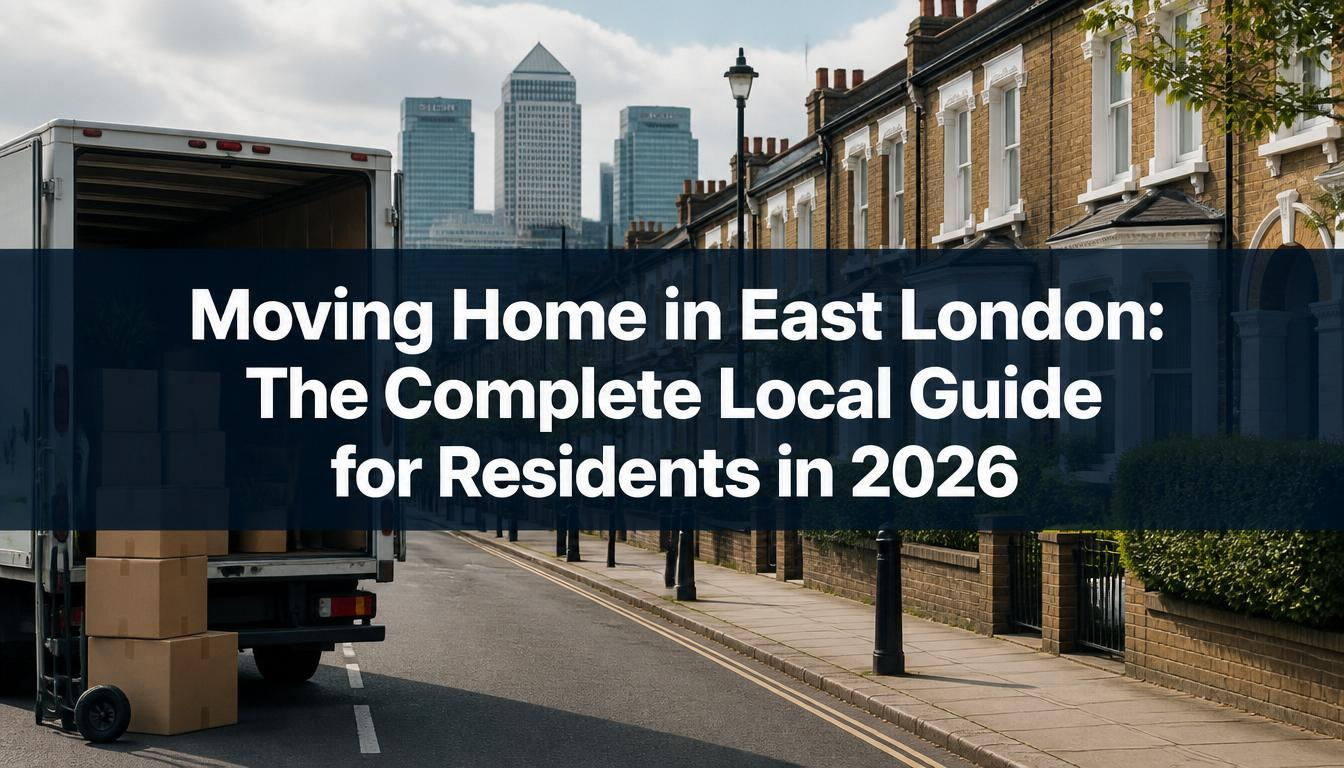
Moving Home in East London? East London has become one of the most dynamic places to live in the United Kingdom. Once defined by its industrial docks and working class terraces, it is now a sweep of glass towers, converted warehouses, creative quarters, and family neighbourhoods that together capture the energy of the modern capital. For anyone planning a move in 2026, East London offers a breadth of housing, culture, and opportunity that few parts of the country can match.
The transformation has been driven by decades of regeneration and investment. The redevelopment of the Docklands and Canary Wharf, the legacy of the 2012 Olympic Games around Stratford, and a wave of new transport and housing have reshaped the area into one of London‘s primary engines of growth. That investment continues, with new developments rising across the East End and the riverside.
The result is a population as varied as the architecture. Professionals are drawn by the finance and technology jobs; creatives by the studios, music venues, and galleries; students by the universities; and families by the parks, schools, and relative value. On the property side, East London has seen some of the strongest long term growth in the capital, and while values have risen, many areas still offer more space for the money than the centre and west. This guide explains, in plain terms, what residents need to know to plan a smooth and cost effective move to, from, or within East London.
Why People Move to East London
East London’s appeal rests on opportunity, connectivity, and culture. Each draws a different kind of resident, and together they have made the area one of the capital’s most sought after places to live.
Employment, Canary Wharf and Tech City
Jobs are a central draw. Canary Wharf is one of Europe’s major financial districts, while the technology and creative cluster sometimes known as Tech City, around Shoreditch and the wider East End, has made the area a hub for startups, media, and digital business. Together they put a deep pool of employment within easy reach of home.
Creative industries and universities
East London has long been a magnet for the creative industries, with studios, galleries, music venues, and independent businesses giving it a distinctive cultural energy. Several universities and colleges in and around the area also bring a large student population, reinforcing its youthful, fast moving character.
Transport improvements: the Elizabeth line, DLR and Overground
Transport has been transformed. The Elizabeth line has dramatically cut journey times across the city and out to Heathrow, the Docklands Light Railway threads through the riverside developments and Canary Wharf, and the London Overground links the eastern neighbourhoods to the rest of the capital. Combined with the Underground, this gives East London some of the best connectivity in the city.
Vibrant communities and property value growth
Above all, East London is known for its communities diverse, distinctive, and tightly woven, from the markets of the East End to the riverside quarters of the Docklands. That character, paired with strong long term property value growth, is why so many people choose to move here and stay.

The Realities of Moving in East London
East London’s density and mix of housing bring particular moving challenges, from high rise towers to congested period streets. A few common factors are worth planning for.
- Congestion East London is busy, and the Congestion Charge zone covers parts of the area, so timing your move outside peak hours helps.
- Controlled parking zones much of the area sits within borough run controlled parking zones, so a visitor permit or suspension is often needed for moving day.
- Apartment developments and high rise buildings many homes are flats in mid or high rise blocks, so moves depend on lifts, corridors, and communal access rather than simply pulling up outside.
- Loading restrictions newer developments often provide designated loading bays with time limits, and many older streets have red routes or loading bans, so efficient loading matters.
- Congested urban streets period terraces and busy high streets can be narrow and tightly parked, making access for a van a challenge.
- New build developments concierge managed buildings have their own moving rules, notice periods, and insurance requirements to follow.
- Event traffic major venues around Stratford and the Docklands draw crowds on event days, which can affect roads and parking, so check the calendar before booking.
The practical lesson is that, in East London, the building and the route often matter more than the postcode. Confirm parking and any building rules early, avoid event days where you can, and brief your movers thoroughly on the lift, loading bay, and access so they arrive prepared.
Average Moving Costs in East London
Moving costs in East London depend on the size of the property, the floor, lift and parking access, and the level of service chosen. The figures below are indicative market ranges for 2026; an accurate quote always depends on volume, distance, and access.
| Property type | Man and van (typical) | Full removals (typical) |
| Studio flat | £120–£240 | £300–£520 |
| One bedroom apartment | £200–£400 | £420–£780 |
| Two bedroom flat | £360–£620 | £740–£1,300 |
| Family home (3–4 bed) | £560–£1,200 | £1,100–£2,800 |
| Shared accommodation (room/HMO) | £90–£220 | Rarely needed |
Indicative East London moving costs by property type and service. Actual quotes vary with floor level, lift access, distance, and timing.
There are three broad ways to move, each suited to a different situation:
| Moving method | Best suited to | Trade offs |
| DIY (self drive hire van) | Studios, students, small loads | Cheapest upfront, but lifts, parking and trips make it hard in apartment blocks |
| Man and van | Apartments, flats, single items, small homes | Flexible and best value for most moves; very large homes may need extra crew or loads |
| Full removals | Family homes, larger or higher value moves | Most comprehensive (packing, insurance, crew) but the highest cost |
Comparing the three main moving methods for an East London relocation.
Cost factors go beyond the headline figure. In apartment blocks, the time spent moving belongings through a shared lift and a timed loading bay can extend an hourly job, while building deposits, parking permits, congestion charges, and cross city distance can all add to the bill. For most studios, flats, and apartments, a man and van offers the best balance of cost and convenience; larger family homes are better served by a full removals service with professional packing and insurance.
Planning a Successful Move in East London
A successful East London move is won in the planning. Because so much depends on buildings, lifts, and parking, the admin matters as much as the muscle.
- Arrange parking suspensions. Apply to the relevant borough for a bay suspension or permit as soon as your date is confirmed, and reserve any development loading bay.
- Get building management permissions. Ask about notice periods, insurance documents, deposits against communal damage, and access and get the rules in writing.
- Book the lift. Reserve the service or goods lift with your building management and confirm any restrictions on moving hours.
- Transfer your utilities. Arrange gas, electricity, and water for both addresses and take meter readings on moving day.
- Set up broadband. Check which providers serve your new development, as choice in new builds can be limited initially, and book installation early.
- Update your address. Set up Royal Mail redirection and notify the organisations listed below.
- Brief your movers. Share the floor level, lift details, loading arrangements, and route so the team arrives with the right equipment and plan.
Moving timeline checklist
Four weeks out: book movers and the lift, start decluttering, check any event calendar. Two weeks out: confirm building rules, arrange parking, book broadband, begin packing non essentials. One week out: confirm utilities, set up Royal Mail redirection, pack room by room. Moving day: take meter readings, keep an essentials box to hand, and check the inventory on arrival.
Change of address checklist
Royal Mail redirection · bank and credit cards · employer and HMRC · DVLA (driving licence and V5C) · GP and dentist · electoral roll · TV Licence · insurers · council tax (your local borough) · subscriptions and regular deliveries.
Professional Moving Services Available in East London
A full range of moving services operates across East London. The right choice depends on the size of your move and how much you want handled for you.
Man and van services
A man and van provides a driver and van, plus an optional extra crew member, usually charged by the hour. It is the most flexible and cost effective choice for the studios, flats, and apartments that make up much of East London’s housing.
House removals
Full service removals firms bring larger teams, vehicles, packing, and more extensive insurance, suited to family homes and higher value contents.
Flat removals
Apartment and flat moves benefit from crews experienced with lifts, loading bays, concierge procedures, and communal access, and from the flexibility to work around building rules and time slots.
Student moves
With a large student population nearby, budget friendly moves for single rooms and shared houses are widely available, with flexible scheduling around term dates.
Office relocations
Commercial moves for desks, chairs, IT, and archives are available with evening and weekend options to minimise business disruption useful in an area with so many startups and small businesses.
Furniture collection
Single item collection and delivery from flat pack and online purchases to second hand finds is a common service, ideal when you do not need a full move.
Packing services
Many companies offer professional packing, either for the whole property or just fragile items, along with boxes and materials.
Storage solutions
Short and long term storage helps bridge gaps between tenancy or completion dates, or while a new build is finished a frequent need in a fast developing area.
Many operators specialise in the area’s mix of new build towers and period homes. Super Man with a Van is one example of an experienced East London moving company offering man and van and removals services with a large fleet, the kind of provider residents use for apartment and house moves. As with any mover, it is worth comparing a few quotes and checking recent reviews before booking, particularly to confirm familiarity with managed building procedures.
For residents moving between East London and other parts of London, choosing a team that understands both local apartment access and wider city traffic can make the whole process more predictable.
Popular Areas Within East London
East London is not one place but many, each neighbourhood with its own character and its own moving considerations.
Stratford
The regeneration showcase around the Olympic Park, dominated by new apartment towers and managed buildings. Moves in Stratford involve concierge teams, lift bookings, and loading bays, and can be affected by event day traffic.
Canary Wharf
The financial district, defined by high rise apartment towers with strict building procedures. Lift reservations, delivery windows, and concierge sign in are central to any move here.
Hackney
A creative, fashionable area of Victorian terraces, converted warehouses, and new flats. Narrow, busy streets and controlled parking mean timing and permits need attention.
Bow
A mixed residential area of period housing and newer developments, well connected by the DLR. Access varies street by street, so brief your movers in advance.
Bethnal Green
A lively East End neighbourhood of terraces, estates, and new flats. Dense streets and limited parking make a confirmed permit or suspension valuable.
Whitechapel
A historic, fast changing area near the City, now served by the Elizabeth line. A mix of older housing and new developments, with busy roads to plan around.
Walthamstow
A popular, increasingly family friendly area with Victorian terraces and a famous market. More suburban in feel, though streets can be narrow and tightly parked.
Leyton
A residential area popular with families and first time buyers, with terraced housing and good transport. Typical on street parking considerations apply.
Mile End
A central East London spot close to the universities, with a mix of flats, estates, and period homes. Busy roads and student demand shape the moving calendar.
Docklands
The riverside quarters around the old docks, dominated by modern apartments with concierge buildings and managed access. Lift bookings and delivery windows are essential.
Moving Into New Build Developments in East London
A large share of East London moves are into new build developments and apartment towers, which come with their own routine. Knowing what to expect prevents delays and disputes on the day.
- Concierge procedures the concierge often controls access, keys, and deliveries; introduce yourself ahead of the move and confirm what they need from you and your movers.
- Lift bookings upper floor moves rely entirely on the lift, so reserve it early and confirm its size, availability, and any capacity limits.
- Delivery restrictions many developments allocate fixed moving or delivery slots and restrict moving hours, so book your slot and arrive on time.
- Parking management check where the van can legally stop and unload, as on street parking near new developments is often limited or controlled; a loading bay or permit may be needed.
- Inventory checks on arrival, photograph and record the condition of the property and any fixtures, especially in rented apartments, to protect your deposit and flag snags.
- Apartment move logistics plan the order of loading and unloading around the lift and corridors, and confirm whether padded lift protection and floor coverings are required.
Moving Between East London and Other Parts of London
East London is a common starting or finishing point for cross city and out of London moves. The logistics and cost vary by direction, so it helps to know what to expect.
| Route | Typical logistics | Cost consideration |
| East to North London | Cross city via the North Circular or local routes; manageable distance | Usually hourly for a man and van; moderate |
| East to West London | Longer cross city route through or around the centre; traffic dependent | Higher due to distance and time; often fixed price |
| East to South London | River crossings can add time; route choice matters | Moderate; depends on the crossing and traffic |
| East London to Hertfordshire | Out of the city via the motorway network; longer distance | Often fixed price; factor in mileage and time |
A broad guide to moving between East London and other regions. Actual costs depend on volume, access, traffic, and timing.
As a rule, shorter cross city moves within London are usually charged on an hourly basis for a man and van, while longer routes across the city to the west, or out to Hertfordshire and beyond are often quoted as a fixed price that factors in distance, time, and mileage. River crossings to the south and traffic through or around the centre are the main variables that affect time, so an accurate, written quote always beats a rough estimate for these journeys. Choosing an operator that covers both your start and end points keeps a cross London move simple, as a single team handles the whole job.

Some East London residents also move outward to commuter towns such as Watford when they want more space while keeping rail access back to the capital. Smaller moves to or from Watford are often planned as fixed price jobs because mileage, loading time, and access at both ends matter more than the postcode alone.
Families moving across North West London may compare East London routes with areas such as Harrow, especially when schools, larger homes, and quieter streets are priorities. For smaller local relocations, Harrow can also be a practical destination for residents who want suburban space but still need direct London connections.
Moves from East London to Wembley need careful timing around stadium and event traffic, particularly near Wembley Park. Larger household moves into Wembley are usually easier when parking, building access, and the moving window are confirmed before the day.
For central and West London relocations, areas such as Paddington and Chelsea bring their own access challenges, from controlled parking to mansion blocks, narrow streets, and strict building rules. North London moves into family areas such as Finchley also benefit from early parking planning, especially where larger homes, long carries, and school run traffic affect the schedule.
Expert Tips for Reducing Moving Costs
- Declutter first the less you move, the less it costs. Sell, donate, or recycle before getting quotes, as price usually tracks volume.
- Stay flexible on dates mid week and mid month moves, away from event days, avoid weekend and month end premiums and are easier to book.
- Pack efficiently handle non fragile items such as books, clothes, and kitchenware yourself, label boxes by room, and leave the heavy and delicate work to the crew.
- Prepare parking a confirmed permit, loading bay booking, or suspension prevents costly delays and lets the crew work efficiently from close to the building.
- Book early early booking secures a better rate and, just as importantly, your preferred lift and loading slot.
- Compare quotes, obtain at least three itemised quotes, check what is and is not included, and confirm insurance cover rather than choosing on headline price alone.

Frequently Asked Questions
Is East London a good place to live?
For many people, yes. East London offers a rare combination of major employment, strong transport, a vibrant cultural scene, and a wide range of housing from new build apartments to period terraces. It appeals to professionals, families, creatives, and students alike, though it is busier and more urban than outer suburbs.
How much does it cost to move in East London?
A studio or one bedroom flat moved by a man and van typically costs between £120 and £400, while a two bedroom flat ranges from roughly £360 to £620. Full removals for a family home commonly run from £1,100 to £2,800. Lift access, parking, the floor you live on, and distance all affect the final price.
Can a man and van move an apartment?
Yes. A man and van service is well suited to the studios, one and two bedroom apartments that dominate much of East London. A two person crew with a Luton van can handle most apartment moves, including furniture dismantling, provided lift and loading access is arranged in advance.
What is the cheapest way to move in London?
For very small loads, a DIY hire van is cheapest on paper, but the time, effort, and parking difficulties often outweigh the saving in dense areas. For most people, a man and van is the most cost effective option that still includes experienced help. Decluttering, moving off peak, and packing yourself reduce the cost further.
How early should I book movers?
Two to four weeks ahead is sensible, especially for month end, Friday, or weekend moves when demand peaks. In concierge managed buildings you should also book the lift and moving slot as early as possible, as popular times fill quickly.
Which East London areas are most popular?
Stratford, Canary Wharf, Hackney, Bow, Bethnal Green, Whitechapel, Walthamstow, Leyton, Mile End, and the Docklands are all popular, each with a different character from new build towers and finance to creative hubs and family streets. The right area depends on budget, lifestyle, and commute.
Do I need parking permits or suspensions to move in East London?
Often, yes. Much of East London falls within controlled parking zones run by the local boroughs, and many developments have designated loading bays rather than on street parking. You may need a visitor or suspension permit, and managed buildings usually require you to pre book a loading slot.
Do East London apartment blocks require lift bookings?
In most high rise and managed developments, yes. Buildings typically require you to reserve the service or goods lift in advance and may restrict moving to certain hours. Confirm the rules with your building management before fixing a date.
What is the difference between a man and van and full removals?
A man and van provides a driver and van, plus optional extra crew, usually charged hourly ideal for apartments and smaller moves. Full removals firms bring larger teams, packing, materials, and more comprehensive insurance, suited to family homes and higher value contents.
Are there restrictions on moving days or times in managed buildings?
Frequently. Many East London developments limit moves to weekday working hours, require advance notice, and ask for proof of the mover’s insurance. Some also charge a refundable deposit against damage to communal areas.
Do moving companies provide packing materials?
Many do. Movers commonly supply boxes, tape, bubble wrap, and protective coverings, and offer full or partial packing services where the crew packs your belongings for you.
Can movers dismantle and reassemble furniture?
Yes. Most man and van and removals services dismantle beds, wardrobes, and flat pack furniture for transport and rebuild them at the destination, often essential for moving items in and out of apartments and lifts.
Is my furniture insured during the move?
Reputable movers carry goods in transit and public liability insurance. Confirm the level of cover before booking, and ask whether managed buildings require sight of the mover’s insurance certificate.
How can I reduce the cost of moving in East London?
Declutter before you pack, book early, choose a mid week and mid month date to avoid weekend premiums, stay flexible on timing, pack non fragile items yourself, and compare several written quotes.
Do I need storage when moving in East London?
Storage is useful when completion or tenancy dates do not line up, when downsizing, or while waiting for a new build to be ready. Many removals companies offer short and long term storage.
Can movers handle same day or last minute moves?
Often, yes. Companies with larger fleets can sometimes dispatch the same day, subject to availability. Same day moves are easier to arrange outside peak periods.
What size van is needed for an East London flat?
A Luton van suits most one and two bedroom flats. Studios, single rooms, and single item collections may need only a smaller van, while family homes may require additional crew or loads.
Can a man and van help with student moves?
Yes. East London has a large student population linked to several universities, and budget friendly man and van services suit single rooms and shared houses, with flexible timing around term dates.
What should I do about utilities and broadband when moving?
Notify your gas, electricity, water, and broadband providers, take meter readings on moving day, and arrange new connections at the destination. In new builds, check which broadband providers serve the development, as choice can be limited at first.
Can a man and van service move me out of East London to another area?
Yes. Cross London and out of London moves are common, and many East London operators cover other parts of the capital and beyond, often as a fixed price job for longer distances.
Key Facts About Moving in East London
- Location: East London spans several boroughs, from the City fringe and the East End out to Stratford, the Docklands, and Walthamstow.
- Transport: served by the Elizabeth line, the Docklands Light Railway, the London Overground, and the Underground, giving some of the best connectivity in the capital.
- Regeneration: extensively redeveloped through the Docklands, Canary Wharf, and the 2012 Olympic legacy around Stratford, with new development ongoing.
- Typical man and van costs: around £120–£400 for a studio or one bed apartment, £360–£620 for a two bedroom flat.
- Typical full removals costs: roughly £420–£780 for a one bed flat, rising to £1,100–£2,800 for a family home.
- Cheapest practical option: for most moves, a man and van offers the best balance of cost and experienced help; DIY suits only very small loads.
- Main moving challenges: high rise apartments, concierge managed buildings, lift bookings, loading restrictions, controlled parking, congestion, and event day traffic.
- Best time to move: mid week and mid month, avoiding weekends, month end, and major event days.
- Booking lead time: two to four weeks ahead, with lift and moving slots booked as early as possible.
- Popular areas: Stratford, Canary Wharf, Hackney, Bow, Bethnal Green, Whitechapel, Walthamstow, Leyton, Mile End, and the Docklands.
- Cross London moves: short cross city moves are usually hourly; longer routes to West London or Hertfordshire are often fixed price.
Expert Summary
Moving in East London is shaped less by distance and more by buildings, access, and timing. The area’s defining features high rise apartments, concierge managed developments, service lifts, timed loading bays, controlled parking, and busy, sometimes event affected roads mean that the success of a move depends heavily on early planning and clear communication with building management. Residents who reserve their lift slot, sort parking and permits, avoid event days, and brief their movers thoroughly on floor level and route have by far the smoothest moving days.
For most apartments and flats, a man and van offers the best balance of cost and flexibility, while larger family homes are better suited to full removals with professional packing and insurance. Booking early, decluttering, and choosing a quieter mid week date will keep costs down, and for cross London moves an operator covering both ends handles the whole job as one. London moving experts familiar with the area’s managed buildings, such as Super Man with a Van, can advise on the right approach for an East London property. Whether you need a same day moving service for a single flat or a planned removal for a family home, the same principle applies: plan around the building and the route, and a move into one of the UK’s most dynamic areas becomes refreshingly straightforward.