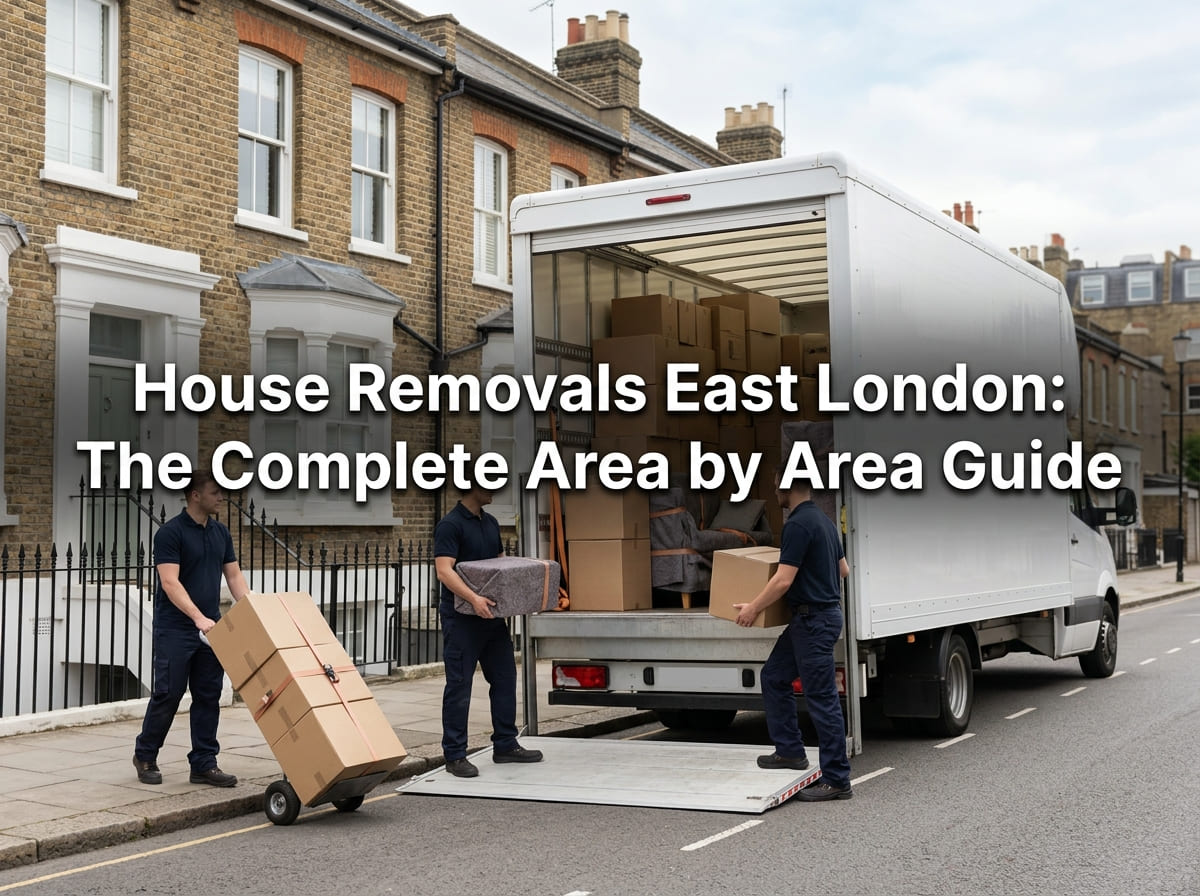
House removals East London style are rarely one job repeated. The area is huge and gloriously varied, and a full home move in Stratford beside the Olympic Park is a completely different proposition from one out of a Victorian terrace in Leyton, a warehouse conversion in Hackney, or a high rise apartment in Canary Wharf. Across Bow, Mile End, Walthamstow, and East Ham you’ll find period terraces, former industrial conversions, new towers, and postwar estates, often within a few streets of each other, and each of them moves differently.
This is an area by area guide to house removals in East London, built for anyone moving a whole home rather than a single item. Because the region is so mixed, the smart approach is to plan around your specific property and street rather than lean on a single template for what an East London move looks like. Below we break the area down, then work through the planning, the parking and access, the cost, and the day itself, so your belongings arrive safely and the move finishes on time.
What House Removals in East London Actually Involve
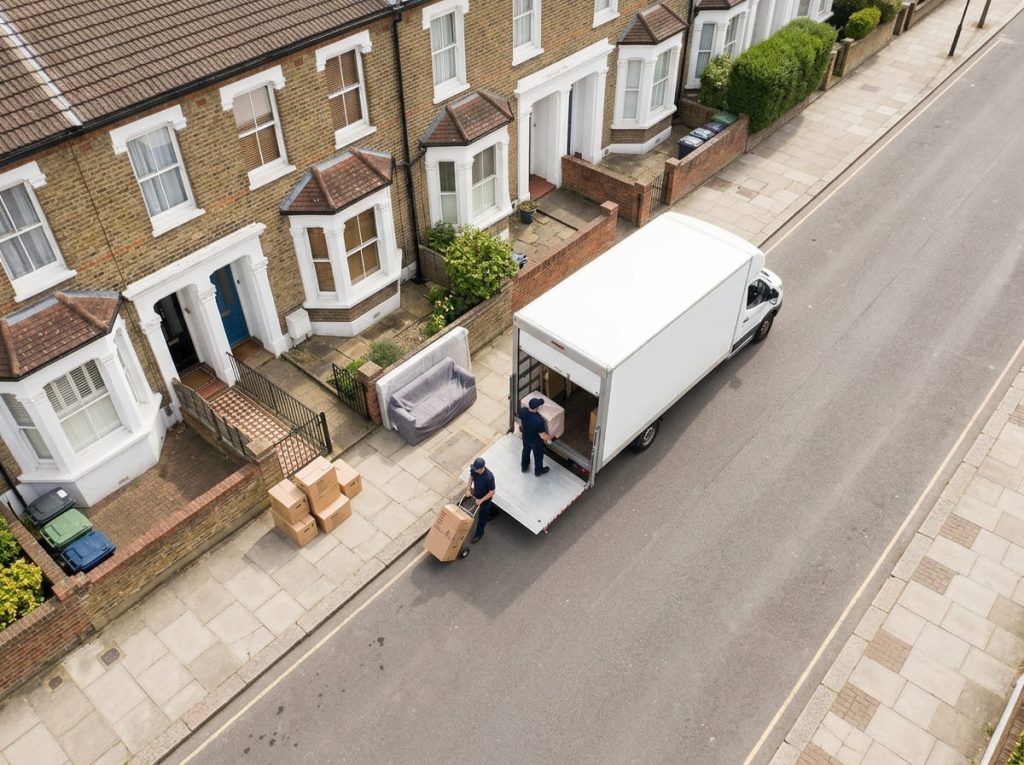
A house removal is a bigger, more structured job than a quick van run. You’re moving most or all of a home, which usually means several rooms of furniture, a full kitchen, wardrobes and beds, appliances, a loft or a shed, and a great many boxes, often against a firm completion date tied to a property sale. That combination of volume, deadline, and access is what separates a full house move from a small flat job.
In East London, the access side is where the real planning lives. The same removal can involve a narrow terrace stair at one end and a booked service lift at the other, and getting a family’s worth of belongings safely between the two takes a proper plan, the right size team, and often more than one trip or a larger vehicle. Done well, a house removal is calm and methodical. Done without preparation, it’s a long day that overruns into the evening.
For the larger household moves specifically, it’s worth using a dedicated removals service rather than a single man with a van. An established firm offering house removals in East London brings the crew, the packing option, and the structured planning that a full home move needs.
East London Area by Area
East London isn’t one place, it’s a patchwork of distinct areas, and knowing how yours behaves lets you brief your removals company accurately. Here’s what tends to shape a house move in each.
Stratford and the Olympic Park
Heavily redeveloped and full of modern apartment blocks and towers, Stratford usually means a service lift, a concierge, and a loading bay, all of which need booking ahead. Major events around the Olympic Park can also snarl the surrounding roads, so check what’s on near your route on your moving date and aim for a quieter window.
Hackney and the warehouse conversions
Hackney’s character comes partly from its former industrial buildings, and the conversions carved out of them bring their own quirks: heavy industrial style doors, unusual layouts, and sometimes awkward access for large furniture. Parking is often tightly controlled here, so a loading window matters.
Leyton, Leytonstone, and Walthamstow
Classic East London terraces dominate here, which means narrow halls, steep stairs, and on street parking that can be permit controlled. These are frequently full house moves, so the questions are about volume, van size, and whether a big wardrobe or sofa will clear the staircase or needs dismantling first.
Bow and Mile End
A mix of period terraces, estates, and newer blocks, so the access varies street by street. The newer parts of Bow bring lift bookings and loading bays into play, while the older housing brings the familiar terrace challenges.
Canary Wharf and the Docklands
High rise living with strict building management. Service lifts, designated loading bays, set moving windows, and size limits are the norm, and none of it can be improvised on the day. Booking the lift and confirming the rules with the concierge is the first job, not the last.
East Ham and the eastern edges
More traditional terraces and family homes, often with slightly easier parking than the central hotspots, and a good share of larger house moves. As East London blurs into Ilford and Barking, moves frequently cross those lines. If your job runs that way, our Ilford page and Barking page cover the local detail for those areas.
Planning a House Removal Across East London’s Varied Homes
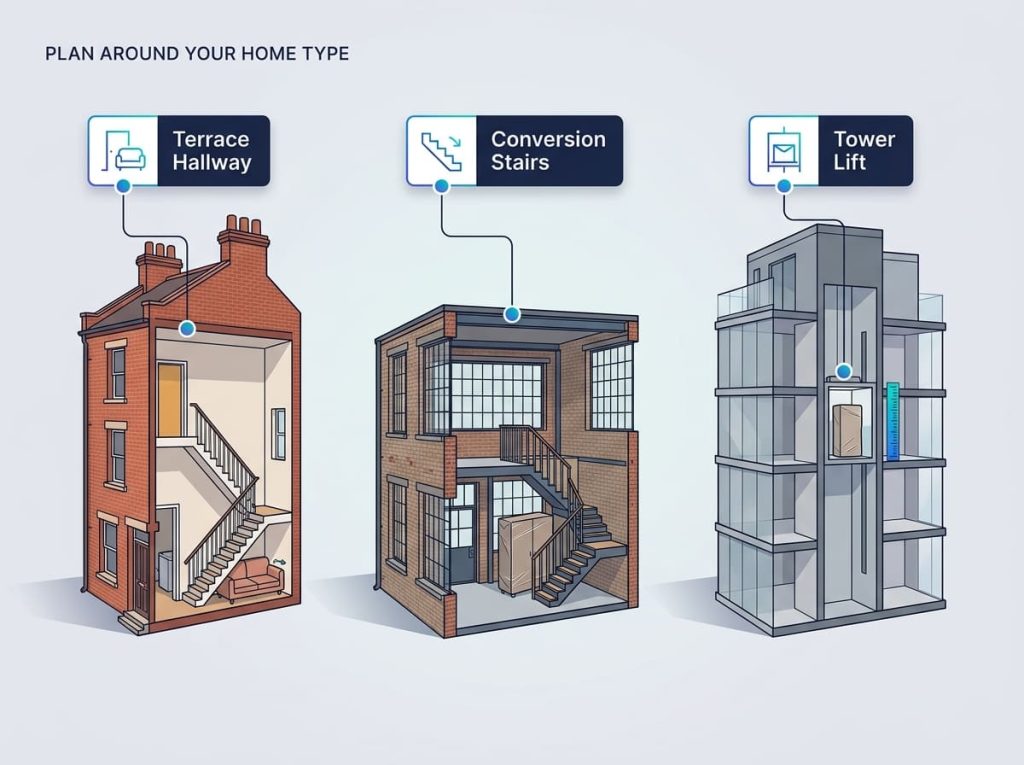
Because the housing is so mixed, the single most useful habit is to treat your exact property type as the starting point and plan the whole move around it.
In a terrace, measure your large items against the hall and the stairs, since the hallway is usually the pinch point where a sofa or wardrobe gets stuck. In a conversion, check the big pieces against any tight industrial style doorways and turning staircases. In a tower, measure against the service lift, because a wardrobe that won’t fit the lift and won’t take the stairs is a genuine problem best discovered in advance. Wherever something won’t clear the route assembled, plan to dismantle it before the day.
Team size follows the volume and the access. A full house move typically wants three or four movers or more, and sometimes a larger vehicle or a second van, especially where there’s a lot to pack, several floors, or a difficult carry. Skimping on the crew to save on the rate tends to backfire on a big move, because a short handed team simply runs the day long. Be honest about the inventory, right down to the loft and the shed, and let the removals company size the job properly.
Parking, Lifts, and Loading Across East London
Access is the detail that varies most across East London, so treat each end of your move on its own terms rather than assuming the two will behave alike.
In the modern towers around Stratford, Canary Wharf, and parts of Bow, the service lift and loading bay are central to the whole move and almost always need booking in advance, with set windows and size limits. In the Victorian terraces of Leyton, Leytonstone, and Walthamstow, it’s the on street parking, the narrow halls, and the stairs that shape the day. Warehouse conversions in Hackney bring their heavy doors and unusual layouts. Parking rules differ street by street, with tightly controlled zones in some areas and loading bays in others.
The practical message is to confirm the lift, the loading bay, or the on street parking specific to each address, and to arrange any permit, suspension, or loading window ahead of time. Because East London spans several boroughs, each with its own rules, the quickest way to find the right authority for your street is through the government’s local council finder. That groundwork lets your movers plan each end of the carry properly instead of solving problems on arrival.
How Much Do House Removals in East London Cost?
No honest mover quotes a fixed price across an area as varied as East London, because the work depends entirely on the job. The core factors are the distance between the addresses, the size and number of vehicles, and the number of movers. Access then adds a great deal, and it varies hugely here, since a terrace stair, a conversion’s awkward doorways, or a tower’s service lift each cost time in different ways.
On top of that sit the things you influence: how much packing you need, any dismantling and reassembly, waiting time if keys are delayed, and the overall duration, which on a full house move can run to most of a day. A well prepared move with everything boxed and ready will always be quicker and more economical than one where the packing is still happening when the van arrives. For a quote that reflects reality, describe both ends fully, including the property types, the access, and what needs packing or dismantling.
House Removals or a Man and Van: Which Do You Need?
The two suit different jobs, and being honest about which you have saves both money and stress.
A man and van service handles the smaller end well: studios and one or two bedroom flats in Leyton, Bow, or near Canary Wharf, student moves around the universities, single item collections, and smaller house moves across to Walthamstow or East Ham. You get a driver with one or two movers and a van sized to the job, charged flexibly to suit shorter local runs. If your load is manageable, that’s often all you need, and you can compare local options through the man and van near me hub.
Full house removals come into their own for the larger Victorian family houses East London has in abundance, particularly where there’s a lot to pack, several floors, and a firm completion date. The extra crew, the packing option, and the structured planning genuinely earn their keep on a move of that scale. If you’re moving most or all of a household, a dedicated East London house removals service is the sensible choice. The deciding factors are the size of the home, how much packing help you want, and how tight your deadline is, so describe the job honestly and take the provider’s recommendation.
Packing and Preparation for a Bigger East London Move
On a full house move, good packing is what keeps the day quick and your belongings safe, and across East London’s often compact homes it matters even more. Use proper boxes rather than bags, keep the weights liftable, and cushion the fragile things with paper or bubble wrap. Pack plates on their edge rather than stacked flat, use the original boxes for electronics where you have them, and label every box with its destination room and a note if it’s fragile or needed first, so at the new place your belongings go straight where they belong instead of being carried twice.
Dismantling deserves its own plan on a bigger move. Beds, large wardrobes, and modular shelving usually need to come apart to leave a room cleanly, fit through a conversion’s doorway, or load into a tower’s service lift. Decide whether you or the removals team will handle it, agree it at booking so the right time and tools are set aside, and keep the fittings in labelled bags taped to the item so reassembly at the new home is quick and complete. A clear out in the weeks beforehand helps too, since a lighter load means a smaller vehicle and a shorter, more economical move.
What a House Removals Day Across East London Looks Like
A well run house removal follows a recognisable shape, and picturing it takes the edge off. In the days before, you finish packing, label the boxes, take apart any furniture you’re handling yourself, confirm the parking and permits, book the lift at both ends if there is one, and set aside an essentials box and your valuables. The evening before, you confirm the time, both addresses, the floor levels, and any access quirks with your movers.
On the day, the team arrives and walks both the plan and the property with you, protects the communal areas and any tight corners, dismantles whatever was agreed, then loads methodically, sturdiest first and fragile items placed with care. After the travel across the area comes the parking and access you sorted in advance, the unload straight into the labelled rooms, the reassembly, and a final check of the important items. Because an East London move can cross a fair distance and mix a terrace with a tower, build in a buffer for traffic, a busy event near the Olympic Park, or a late key handover, so a small hiccup stays a small hiccup.
Booking Your East London House Removals
The key to a smooth East London house move is to plan around your specific property and street rather than the region as a whole. Establish the property types at both ends, sort the lift, loading bay, or parking for each, check for any major local events on your date, pack and label early, plan the dismantling, and keep your valuables and documents with you. Then get a written quote based on the genuine details, and confirm the plan the night before.
When you’re ready for a full home move, a dedicated house removals East London service will bring the crew, the packing, and the planning a bigger job needs. For smaller local moves across the area, start at the man and van near me hub instead. Whichever you choose, compare a couple of options, read the recent reviews, and check what’s included before you book, so the service genuinely fits your particular move.
Frequently Asked Questions
Does East London’s variety really change how I should plan a house removal?
Yes. A terrace, a warehouse conversion, and a high rise flat all move very differently. Plan around your specific property and street at both ends rather than around a single idea of the area, since the access, parking, and lift arrangements can be completely different from one to the other.
Do I need to book a lift for a Canary Wharf or Stratford move?
Usually, yes. Modern East London towers typically require you to book the service lift in advance, with a set slot and size limits, and many have a designated loading bay. Arrange this early, since a lift you can’t book on the day will stall the whole move.
Do I need full house removals, or is a man and van enough?
For most studio and one or two bedroom flats, a man and van with one or two movers is enough. For larger Victorian houses with several rooms to pack and a firm completion date, full house removals with a bigger crew will suit you far better.
How do I handle East London parking that varies so much?
Check the specific rules for both your current and new street, since controlled zones and loading bays differ across the boroughs. Find out whether a loading window is allowed where you need it, and arrange any permit or suspension in advance.
How do I get an accurate East London house removals quote?
Describe both ends fully: the property types, the lift, loading bay or parking, what needs packing or dismantling, and the distance across the area. A quote built on those details will be far more reliable than a generic estimate.
How far ahead should I book house removals in East London?
Book as early as you can, especially for weekends, month ends, and moves involving towers where lifts and loading bays must be reserved. Larger house moves need more planning, so give the company time to allocate the crew, the vehicles, and the schedule.