
Booking a man and van Ilford move throws up the same handful of questions for almost everyone, and the honest answers are rarely the ones you find on a generic quote page. How much will it really cost? Do you actually need a full removals firm, or will a van and a couple of movers do? Where on earth is the van meant to park near the town centre? This guide answers those questions directly, one at a time, for the realities of moving in and around Ilford.
Ilford has changed fast in recent years. The bustle of the town centre and Ilford Lane gives way to the quieter streets of Gants Hill, Seven Kings, Goodmayes, and Barkingside, faster rail links have brought a wave of new flats, and the housing runs from Victorian terraces to 1930s semis to modern blocks. That variety is why no two moves here look quite alike, so instead of a generic checklist, here are straight answers to the questions that decide how your day goes.
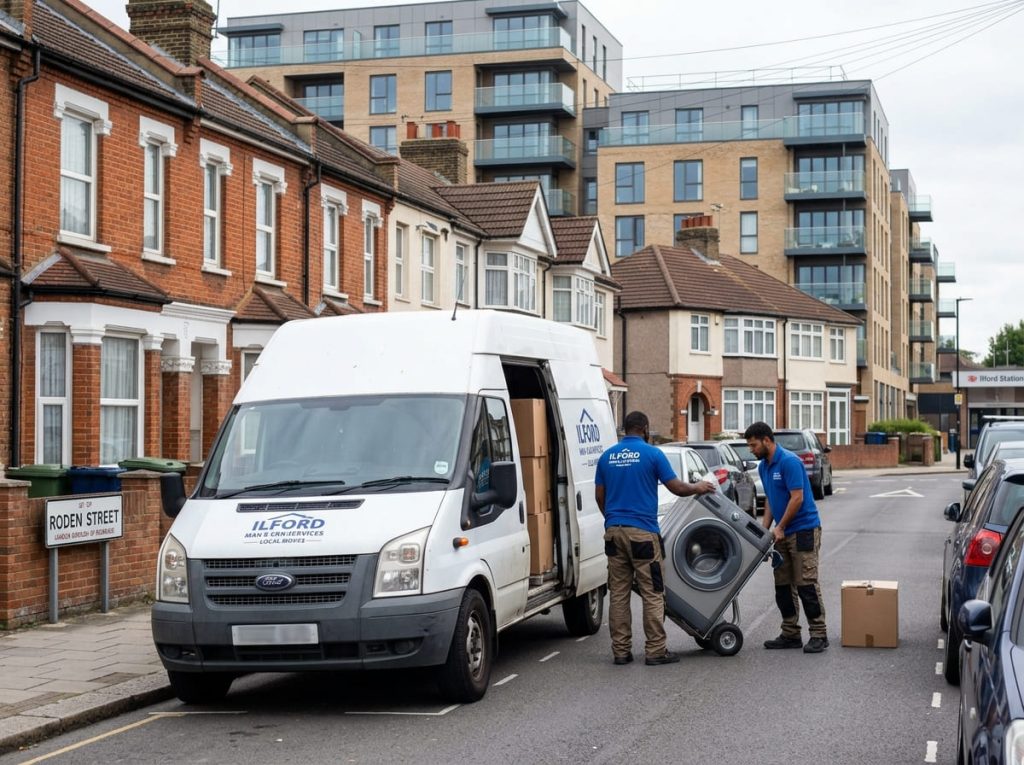
What Does a Man and Van Ilford Move Actually Cost?
The honest answer is that there’s no single fixed price, and you should be wary of anyone who gives you one before hearing the details. A local move is priced on the job, not on a rate card.
Three things form the backbone of any quote: the distance between your two addresses, the size of van needed, and the number of movers. On top of that sits access, which is where Ilford quietly adds time. A steep stair in a terrace, a long carry from a controlled parking road, a small or slow lift in a modern block, or tight kerb space near the town centre all stretch the job out. Then come the variables you influence yourself, namely how much packing you need, whether furniture has to be dismantled and rebuilt, any waiting time if the keys are late, and how long the whole thing runs.
The useful takeaway is that you shape the cost as much as the mover does. A move where everything is boxed, labelled, and ready will always be quicker and cheaper than one where the team arrives to find the cupboards still full. To get a quote that resembles the final bill, have this ready before you call:
- Both postcodes and the property type at each end
- A rough inventory, or better, a short phone video of each room
- The floor levels and whether there’s a lift
- The parking situation at both addresses
- Anything fragile, heavy, or awkward, and anything needing dismantling
Hand a mover that picture and the number they give back will be one you can actually plan around.
Do I Need a Full Removals Firm, or Just a Van?
For the majority of Ilford moves, a van and a couple of movers is exactly right. Studio and one or two bedroom flats, student moves, single item collections, and smaller house moves heading to Seven Kings, Goodmayes, or Barkingside all sit comfortably in man and van territory. You get a driver with one or two movers and a suitably sized van, charged flexibly so the cost tracks the actual work rather than a fixed package.
A full removals service earns its place on the bigger jobs. The larger terraces and semis, where there’s plenty to pack, several rooms to clear, and a firm completion date tied to a sale, are where the extra crew, the optional packing service, and the tighter planning genuinely pay off. The honest test comes down to three things: the size of the home, how much packing help you want, and how tight your deadline is.
If you’re on the fence, describe the job honestly and let the provider steer you, since a good mover would far rather tell you that you need a bigger team than turn up under resourced and lose the afternoon. To compare local options across Ilford and the wider area, the man and van near me hub is a sensible place to start, and for the largest household moves an established firm like Super Man with a Van also runs full house removals across London.
Which Van Size and How Many Movers Will I Need?
It’s tempting to book the biggest van going, just in case, but a typical Ilford flat often needs only a mid sized van with an experienced mover, while a family house may want a Luton or a second trip. The trick is an honest inventory. Walk each room and note the bags, the cupboards, the wardrobe contents, and the loft and under bed clutter that quietly fills a van, not just the obvious furniture. Too small and you pay for a second trip. Too large and you pay for empty space.
Movers work the same way. One suits a light, box based job where you’ll lend a hand. Two is the sweet spot for most flats, furniture, and any staircase, which covers a lot of Ilford’s terraces and conversions. Three or more comes into play for larger homes, heavy items, or a long carry from a controlled parking street. Skimping here to shave the hourly rate usually backfires, because a short handed team simply takes longer, and time is what you’re paying for.
What Makes Ilford’s Homes Tricky to Move?
Ilford’s housing stock is unusually varied, and each type moves differently, so the smart move is to know your property’s quirks before you book.
The Victorian terraces near the town centre often have a narrow hall and a steep stair, and that hallway is usually the pinch point where a sofa or wardrobe gets stuck. Measure your biggest pieces against the tightest part of the route, and dismantle anything that won’t clear it assembled. The 1930s semis of Gants Hill, Newbury Park, and Barkingside are roomier, but their gardens, lofts, and sheds add volume people forget to mention. Period conversions bring turning staircases and shared entrances, while the modern blocks near the station usually mean a concierge, a service lift, and a loading bay that need booking ahead.
Whatever your home, the same rule holds. Tell your mover the specifics, the floor level, the lift, the narrow bits, the big items, so the team arrives ready for your job rather than improvising when they get there.

Where Can the Van Actually Park Near the Town Centre?
Parking is the factor most likely to turn a smooth Ilford move into a slow, expensive one, so it deserves proper thought at both ends of the move.
Around the town centre, Ilford Lane, and the station, controlled zones and heavy traffic mean a van often can’t simply pull up outside and wait. On the residential roads towards Gants Hill and Newbury Park, kerb space is usually easier, though lines of parked cars can still push the nearest realistic loading point further from the door than you’d like, and a Luton van needs a genuine gap, not the half space a car would take.
Before the day, work out where a van can legally stop at each address and roughly how far that is from the front door, then check whether your road allows a loading window even where parking is otherwise restricted, since many controlled streets do. Ilford sits in the London Borough of Redbridge, so the current parking and loading rules are set out through Redbridge Council. Sort this in advance and the carry stays short. Leave it to chance and you may be paying movers to walk your belongings the length of the street.
Do I Need a Parking Permit or a Loading Window?
Quite possibly, depending on the street. Many Ilford roads, especially near the town centre and the station, fall within controlled parking zones, and to load legally you may need a visitor permit, a dispensation, or a suspended bay. The important thing is to arrange whatever you need ahead of time rather than hoping on the day, because a parking ticket or a van with nowhere to stop can derail an otherwise well planned move.
Check the rules for both addresses with Redbridge Council, and if either end is a managed building or a new development near the station, add one more step and confirm the loading bay and service lift arrangements with the building manager or concierge. Those almost always need reserving, and a lift you can’t book on the day will stall everything else.
How Should I Pack, and What Needs Dismantling?
Packing is the biggest task and the one most people underestimate, so start early and do it properly. Work room by room so nothing gets muddled, use proper boxes rather than bags, keep the weights liftable, and cushion the fragile things. Pack plates on their edge rather than stacked flat, and keep the original boxes for televisions and electronics if you have them, since they’re shaped to protect the contents. Label every box with its destination room and a note if it’s fragile or needed first, so at the new place your belongings go straight where they belong instead of being carried twice.
Dismantling deserves a plan of its own. Beds, large wardrobes, and modular shelving usually travel far better in pieces, and in Ilford’s narrower terraces, taking a big piece apart is often the only way it leaves the room without damage. Decide before the day whether you’ll handle it or ask the man and van team to, and agree it at booking so the time and tools are set aside. Keep the screws and fittings in a labelled bag taped to the item, so reassembly at the new home is quick and nothing goes missing. And keep the genuinely irreplaceable things, the passports, jewellery, documents, and laptops, with you in the car rather than in the van.

When Is the Best Time to Move, and How Far Ahead Should I Book?
Timing matters more in Ilford than the mileage suggests. The streets around the town centre and Ilford Lane are busy for much of the day, so a weekday late morning start usually gives you a calmer load and a clearer run out towards Goodmayes or Newbury Park than a rush hour slot would.
Booking ahead matters too, and it’s partly down to the transport picture. Ilford station now sits on the Elizabeth line, and that faster link has driven both new development and a brisk turnover of residents, which means the popular dates fill up quickly. A week or two of notice is sensible for a local move, and more for weekends and month ends when demand peaks. If your date is fixed by a tenancy or a completion, book as early as you can to secure the slot you want. It’s also worth sense checking journey times and any planned engineering works through Transport for London when you settle on a day, particularly for a longer move across the city.
What Admin Do I Need to Sort Around the Move?
Moving isn’t only furniture, and the paperwork has a habit of eating your week if you leave it late, so fold it into your plan early rather than scrambling once the boxes have landed.
Tell the important organisations about your new address in good time. There’s a genuinely helpful government starting point that lists who to notify, from the DVLA to HMRC, at the gov.uk change of address guide. Set up mail redirection so nothing important goes astray in the gap between homes, which you can arrange through Royal Mail’s redirection service, ideally a week or two before you move since it takes a little time to activate.
Sort your council tax with Redbridge for both properties, and if you’re renting, book your check out inventory and give notice in line with your tenancy. On the day itself, take meter readings at both ends, photograph them, and notify your energy supplier. None of it is difficult, but all of it is easy to forget on a day dominated by carrying boxes, so keep a short written list somewhere obvious.
What Does a Smooth Ilford Moving Day Look Like?
Picturing the shape of the day takes a lot of the stress out of it. In the days before, you finish packing, label the boxes, take apart any furniture you’re handling yourself, confirm the parking and any permits, book the lift if there’s one, and set aside an essentials box and your valuables. The evening before, you send your mover a short confirmation covering the time, both addresses, the floor levels, and any access quirks.
On the morning, the team arrives and walks the property with you so everyone knows what’s going and what’s staying. They protect the communal areas and any tight corners, dismantle whatever was agreed, then load methodically, sturdiest first, fragile items placed with care, the essentials box last so it comes off first. A final sweep of every room, including the loft, the garden, and the cupboard everyone forgets, and you’re on your way.
At the new address, the parking and access you sorted in advance pays off, the team unloads straight into the labelled rooms, reassembles anything agreed, and you check the important items before signing off. Build in a buffer for traffic near the town centre or a late key handover, and a small hiccup stays a small hiccup.
Booking Your Man and Van in Ilford
By now you’ve got the answers, and they all point the same way: a good Ilford move is a well briefed one. Establish the property types and access at both ends, sort the parking or the lift, avoid the town centre’s busiest hours, pack and label early, plan the dismantling, keep your valuables with you, and handle the admin in good time. Then ask for a written quote based on the real details of your home rather than a vague estimate, and confirm the plan the evening before.
When you’re ready to compare local help across Ilford and the surrounding east London areas, start at the man and van near me hub, where you can look at options for your area and get a quote built around your actual move. Whichever provider you choose, compare a couple, read the recent reviews, and check exactly what’s included, so the service genuinely matches your move. Get those pieces in place and a man and van Ilford move becomes what it should be, an organised, controlled day rather than a scramble.
Frequently Asked Questions
Can a man and van cope with an Ilford terrace move?
Yes. The main considerations are the narrow hall and the stairs, so tell your movers about them and measure the large items in advance. With that information they can bring the right equipment and enough people for the job.
Is a man and van enough for a two bedroom flat in Ilford?
For most two bedroom flats, yes, with one or two movers and the right van. If you have a great deal to pack or a very tight deadline, ask about a larger crew or a full removals option instead.
How do I deal with parking near Ilford town centre?
Check whether your road allows a loading window even in a controlled zone, and confirm the parking at the new address too. Many controlled streets do permit loading, and Redbridge Council sets out the rules. Your mover can advise once they know both ends.
Will the movers dismantle and rebuild my furniture?
Many will, if you agree it at booking so the time and tools are allowed for. Beds, wardrobes, and shelving often have to come apart to leave Ilford’s narrower terraced rooms. Keep the fittings labelled so reassembly is quick.
How much notice do I need to book a man and van in Ilford?
A week or two is sensible for a local move, and more for weekends and month ends when demand is higher. If your date is fixed by a tenancy or a completion, book as early as you can.
Do I need a parking permit or suspension to move in Ilford?
Quite possibly, depending on the street. Many Ilford roads near the town centre and the station are controlled, so you may need a visitor permit, a dispensation, or a suspended bay to load legally. Check both addresses with Redbridge Council in advance.
Can I move from Ilford to another part of London?
Yes, most man and van services cover moves from Ilford to other parts of London and beyond. For a longer move, provide both postcodes, a full inventory, and the access details at both ends so the quote reflects the real journey.