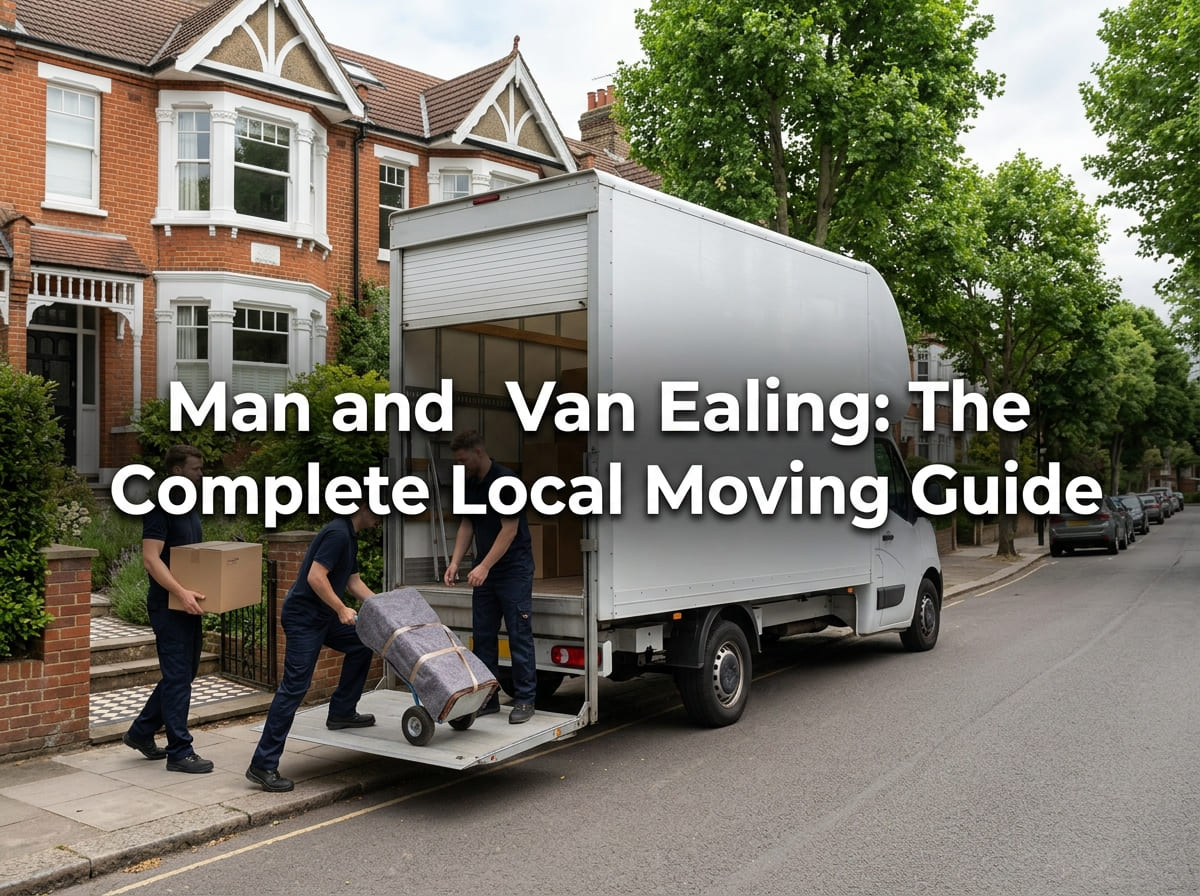
Ealing earned its old nickname, the queen of the suburbs, and it still feels a cut above the ordinary. Broad tree lined avenues, red brick mansion blocks, and Edwardian houses sit within a short walk of a town centre that has changed enormously in recent years. That contrast is exactly why a move here rarely behaves the way you expect. A quiet road near Pitshanger is a different world from the Broadway at five o’clock on a Friday, and the way you plan a man and van Ealing move has to account for both.
This is a proper local guide rather than a generic checklist. If you’re arranging a man and van in Ealing, or you’re just weighing up whether to hire help at all, the pages below walk through what genuinely shapes a move in this corner of West London: the neighbourhoods and how each one behaves, the kind of homes you’ll be carrying furniture in and out of, the parking and permit realities, the admin that quietly eats your week, and a timeline that keeps the day from unravelling. The aim is simple. Fewer surprises, safer belongings, and a move that finishes when it’s supposed to.
Why Moving in Ealing Isn’t Quite Like Moving Anywhere Else
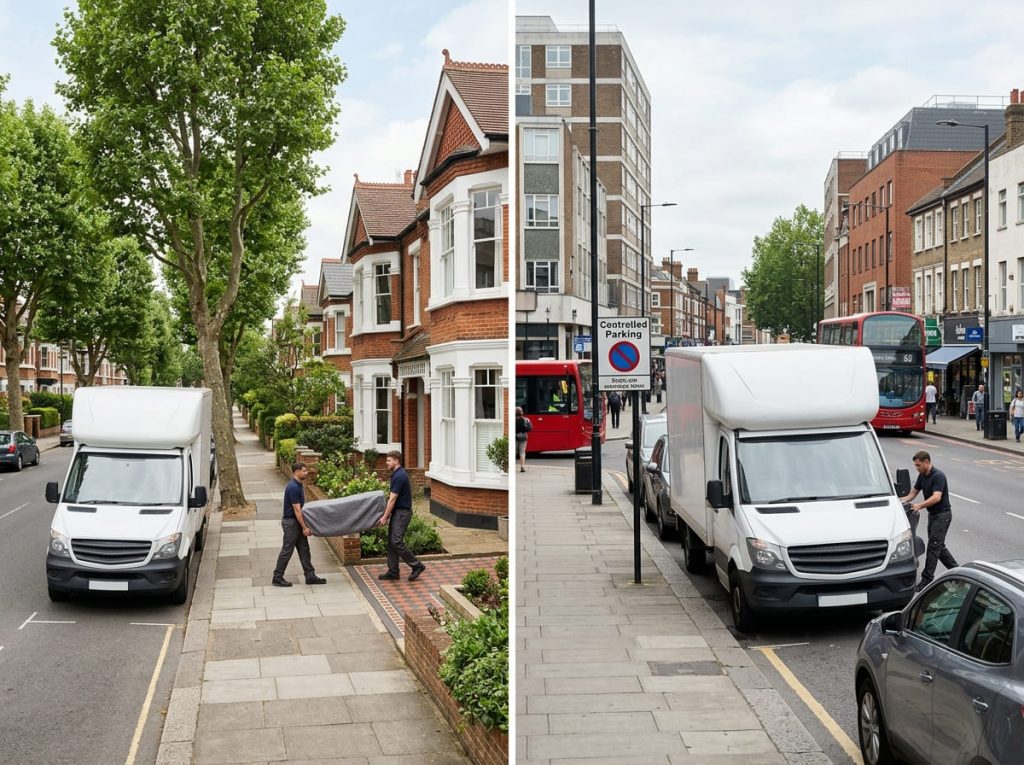
On paper, Ealing looks like an easy place to move. It’s well connected, largely residential, and not as relentlessly congested as central London. In practice, three things make it its own particular puzzle.
The first is the housing stock. Ealing has one of the most varied mixes in West London, spanning grand Edwardian and Victorian family houses, purpose built mansion blocks, converted flats carved out of larger period homes, postwar maisonettes, and a growing number of new build apartments clustered around the town centre. Each of those moves differently. A garden flat with its own front door is a straightforward carry. A third floor conversion with a turning staircase and no lift is a genuine test of planning, and a new build with a booked service lift and a designated loading bay comes with a rulebook of its own.
The second is the transport picture, which has reshaped the area. Ealing Broadway now sits on the Elizabeth line alongside the Central line, the District line, and mainline services, and that connectivity has driven both a redevelopment of the town centre and a steady churn of people moving in and out. More arrivals and departures means the popular moving dates, the weekends and the month ends, fill up faster than people expect. If your date is fixed by a tenancy or a completion, book early. You can sense check journey times and any planned engineering works through Transport for London when you’re picking a slot.
The third is parking, which in Ealing is less a detail than a deciding factor. Large stretches of the borough fall within controlled parking zones, and the pretty avenues that make the area so desirable are often the very roads where a Luton van struggles to find a legal, close spot. Get the parking right and a move flows. Get it wrong and you’re paying for movers to walk your belongings fifty metres to the van, over and over. We’ll come back to this properly further down.
Put those three together and the lesson is the same one every experienced local mover will tell you. Plan around your specific street and property, not around a general idea of Ealing. The rest of this guide helps you do exactly that.
Ealing Neighbourhood by Neighbourhood: What to Expect
Ealing isn’t one place, it’s a cluster of distinct neighbourhoods, and each carries its own moving quirks. Knowing what your area tends to throw up lets you brief your movers accurately and avoid the classic day of surprises.
Ealing Broadway and the town centre
The busiest and most built up part of the borough, and the trickiest for loading. The redevelopment around the station has brought new apartment blocks with concierge desks, service lifts, and loading bays that almost always need booking in advance. If you’re moving to or from one of these, treat the building’s rules as the first job on your list, since a lift you can’t book on the day will stall everything else.
On the older streets feeding the Broadway, kerb space is tight and often controlled, so a loading window matters. This is also the area where timing bites hardest. Avoid the commuter peaks and the weekend shopping crush, and a weekday late morning will serve you far better.
West Ealing and the W13 streets
A little calmer than the Broadway, with a mix of conversions, terraces, and family homes. Parking is generally easier than in the town centre but still worth checking street by street, since the controlled zones don’t stop at obvious boundaries. West Ealing has seen its own development around the Elizabeth line station, so newer blocks with their own access rules sit alongside older housing.
Northfields, South Ealing, and Little Ealing
Quieter, leafier, and popular with families, these streets off the Piccadilly line tend to offer slightly better kerb space, though the mature trees that make them lovely can mean overhanging branches and awkward angles for a tall van. The homes here are often period conversions and family houses, so stairs, turning landings, and the odd narrow hallway are the things to flag rather than lift bookings.
Hanwell and the W7 side
Further west, Hanwell has a village feel and a good share of Victorian and Edwardian houses. Moves here are frequently full house jobs rather than single flat moves, so the questions shift towards volume, van size, and whether one trip will do it. Parking is often more forgiving than central Ealing, but the older terraces bring their own narrow entrances.
Pitshanger, Brentham, and the northern avenues
The area around Pitshanger Lane and the Brentham Garden Suburb is prized for its character, and character usually means older homes, narrow original staircases, and roads that weren’t designed with a Luton van in mind. Beautiful to live in, a little more thought to move out of. Measure your big pieces against the stairs here rather than assuming they’ll glide down.
The Acton and Southall borders
Ealing blurs into Acton to the east and Southall to the west, and moves often cross those informal lines. If your job runs from one to the other, it’s still a local move, but confirm the parking and access at both ends separately, because a terrace on the Acton side and a newer flat towards Southall can behave nothing alike.
Who’s Moving in Ealing, and What Each Move Needs
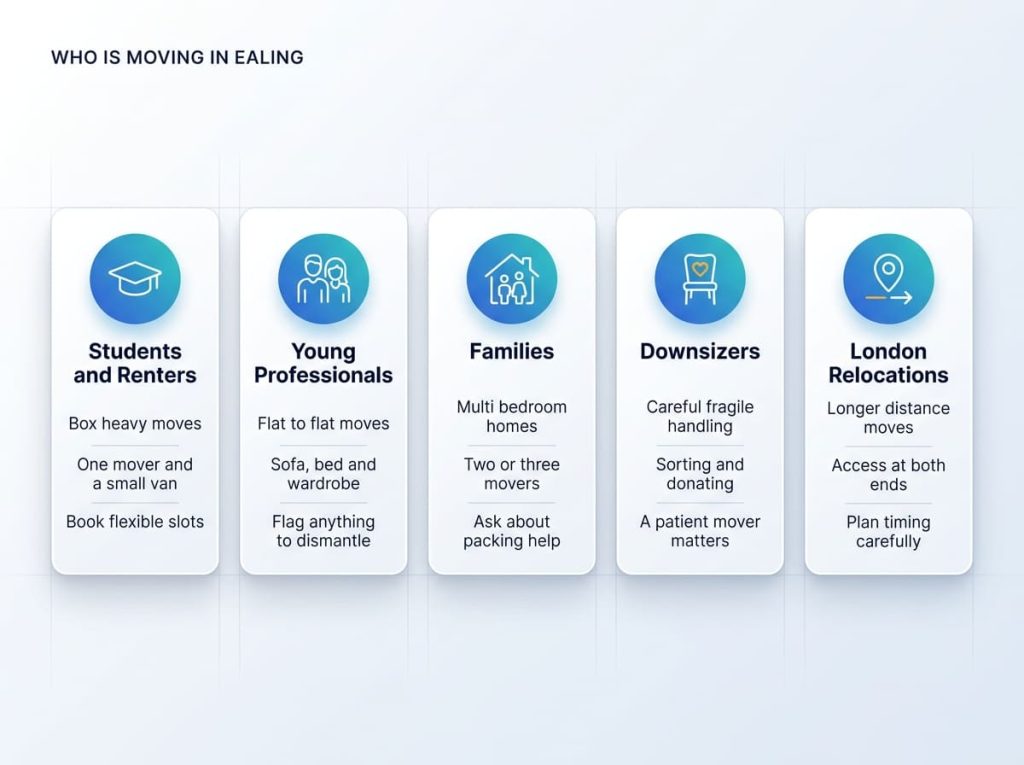
Ealing draws a real spread of people, and the right man and van setup looks quite different depending on who’s moving. Recognising which group you fall into helps you ask for the right thing.
Students and young renters. With the University of West London’s main campus on St Mary’s Road and a steady rental market, Ealing sees a lot of smaller, box heavy moves. These are the natural home of the man and van: a driver and one mover, a modest van, flexible timing, and a quick turnaround. The main things that trip students up are leaving packing until the morning and forgetting that a shared house often has awkward stairs and shared front doors.
Young professionals and couples. Often moving between flats, sometimes into a first shared home, this group usually has a sofa, a bed, a wardrobe, a fair few boxes, and a full time job that makes weekend or evening slots tempting, which is exactly when demand peaks. Booking ahead and being honest about the furniture, especially anything that needs dismantling, keeps these moves smooth.
Families. Ealing’s family houses generate the bigger jobs, with multiple bedrooms, garden furniture, appliances, lofts, and years of accumulated belongings. Some of these are still comfortable man and van jobs with two or three movers, while the larger ones tip into full removals territory. The deciding question is volume and whether you want packing help.
Downsizers and later life movers. Moving out of a long held family home is as much an emotional job as a logistical one, and it tends to involve careful handling of treasured and fragile items, plus decisions about what goes to family, what’s donated, and what’s kept. A patient, communicative mover matters more here than a rock bottom rate.
People relocating into or out of London. Ealing’s connectivity makes it a common landing point for people moving to the capital and a launch pad for those leaving it. These longer moves need clear planning around distance, timing, and access at both ends, and they’re worth quoting carefully rather than on a rough guess.
Whichever group you’re in, the honest brief is the same. Tell the mover what you actually have and where it has to go, and let them size the job properly.
Getting Ready: The Preparation That Actually Changes the Day
Most of what makes a man and van Ealing move go well happens before the van ever turns up. Here’s where your effort genuinely pays off.
Size the van to the job, not to your nerves
It’s tempting to book the biggest van going, just in case, but for a typical Ealing flat a mid sized van with an experienced mover is often plenty, while a family house may want a Luton or a second trip. The trick is an honest inventory. Walk each room and note not just the obvious furniture but the bags, the cupboards, the wardrobe contents, and the loft and under bed clutter that quietly fills a van. A short phone video sent to your mover is worth a hundred words and helps them size it correctly. Too small and you pay for a second trip. Too large and you pay for empty space.
Get the number of movers right
A man and van can mean one mover or several, and Ealing’s stairs and access often justify a second pair of hands. One mover suits a light, box based job where you’ll help. Two is the sweet spot for most flats, furniture, and any staircase. Three or more comes into play for larger homes, heavy items, or difficult carries from a leafy avenue where the van can’t get close. Skimping here to save on the hourly rate usually backfires, because a short handed team simply takes longer.
Pack early, pack properly, label everything
Packing is the single biggest task and the one most people underestimate. Work room by room so nothing gets muddled, use proper boxes rather than bags, keep the weights liftable, and cushion the fragile things. Label every box with its destination room and a note if it’s fragile or needed first, so at the new place your belongings go straight where they belong instead of being carried twice. Keep the original boxes for televisions and electronics if you have them, since they’re shaped to protect the contents. And finish before moving day, because a team arriving to half packed rooms is a team you’re paying to wait.
Plan the dismantling in advance
Beds, large wardrobes, and modular shelving usually travel far better in pieces, and in Ealing’s period homes with their turning staircases, dismantling is often the only way a big piece leaves the room without a scrape. Decide before the day whether you’ll take these apart yourself or ask the man and van team to do it, and agree it at booking so the time and tools are allowed for. Keep the screws and fittings in labelled bags taped to the item, so reassembly at the new home is quick and nothing goes missing.
Protect the fragile and the irreplaceable
Mirrors, artwork, glassware, and televisions all want careful wrapping, and the genuinely irreplaceable things, the passports, the jewellery, the documents, the laptops, are best kept with you in the car rather than loaded into the van. Point out the fragile items to your movers so they’re loaded thoughtfully rather than wedged in last under time pressure.
Clear the route at both ends
Before the van arrives, clear the hallways, landings, and doorways at both properties so there’s nothing to trip over or squeeze past. Move the mats, the pet beds, and the loose obstacles aside. A clear internal path speeds the carry and cuts the chance of a knock to a wall or a shin, which matters all the more in a rented flat where you’d like the deposit back.
Man and Van Versus Full Removals in Ealing
One of the most common questions is whether a man and van is enough or whether you need a full removals firm, and the honest answer depends entirely on the job.
A man and van service handles the bulk of Ealing moves comfortably. Studio and one or two bedroom flats, student moves near the colleges, single item collections, and smaller house moves heading across to Hanwell, Acton, or Southall all sit squarely in its wheelhouse. You get a driver with one or two movers and a suitably sized van, charged in a flexible, often hourly way that keeps the cost in proportion to the work. For a large share of the flats and conversions Ealing is full of, it’s the sensible, economical choice.
Full removals come into their own for the bigger family houses, particularly the substantial Edwardian and Victorian homes the area is known for, where there’s a great deal to pack, several floors to clear, and a firm completion date tied to a property sale. The extra crew, the option of professional packing, and the structured planning genuinely earn their keep on a move of that scale. The deciding factors are the size of the home, how much packing help you want, and how tight your deadline is.
If you’re unsure which side of the line you fall on, describe the job honestly and let the provider steer you. A good mover would far rather tell you that you need a bigger team than turn up under resourced and run the day into the evening. If you’re comparing local options, the man and van near me hub is a useful starting point for finding help across Ealing and the surrounding areas.
What Affects the Cost of a Man and Van in Ealing
No reputable mover will quote a fixed figure without understanding the job, and you should be wary of anyone who reels off a flat price before hearing the details. The cost of a local Ealing move is built from a handful of factors working together.
The core three are the distance between your two addresses, the size of van required, and the number of movers. On top of those, access is where Ealing quietly adds time. Stairs without a lift, a long carry from a tree lined avenue to the nearest legal loading spot, a small or slow communal lift in a mansion block, and tight or controlled parking all lengthen the job in ways a straightforward ground floor move never would.
Then come the variables you have some control over. How much packing you need, whether furniture has to be dismantled and rebuilt, any waiting time if the keys are late, and the overall duration of the day all feed into the final figure. A move where everything is boxed, labelled, and standing ready will always be quicker and cheaper than one where the team arrives to find the kitchen cupboards still full. The date matters too, since the popular weekend and month end slots are in higher demand.
The practical takeaway is that you shape the cost as much as the mover does. Give a full and honest picture of your home, including the floor levels, the access, and the parking at both ends, and the quote you get back will actually resemble the bill you pay.
Parking, Permits, and Access in Ealing
If there’s one section of this guide worth reading twice, it’s this one, because parking is the factor most likely to turn a smooth Ealing move into a slow, expensive one.
Large parts of Ealing operate controlled parking zones, which means you can’t assume a van will simply pull up outside and wait while it’s loaded. Near the Broadway, the station, and the busier hubs, kerb space is limited and often restricted by time. On the residential avenues, resident permit bays and lines of parked cars can push the nearest realistic loading point further from your door than you’d like. And a Luton van needs a genuine gap, not the half space a car would squeeze into.
Before the day, do three things. First, identify where a van can actually stop at both your current and your new address, and measure roughly how far that is from each front door. Second, check whether your road allows a loading window even where parking is otherwise restricted, since many controlled streets do. Third, if you’ll need a suspended bay, a visitor permit, or a dispensation to load legally, arrange it in advance rather than hoping on the day.
The council is the place to sort this, and you can find the current parking, permit, and suspension rules through Ealing Council. For a managed building or a new development, add a fourth step and confirm the loading bay and service lift arrangements with the building manager or concierge, since these almost always need booking.
Inside, Ealing’s mansion blocks and period conversions bring communal entrances, shared stairs, and lifts that vary a lot in size. If your block has a lift, confirm it’s working and big enough for your furniture, and check whether it needs reserving. A wardrobe that won’t fit the lift and won’t turn on the stairs is a problem far better discovered in advance than with the van idling outside on a meter.
The Admin Side of an Ealing Move
Moving isn’t only furniture. The paperwork and the address changes have a habit of eating your week if you leave them to the last minute, so it’s worth folding them into your plan early.
Tell the important organisations about your new address in good time. There’s a genuinely helpful government starting point that lists who to notify, from the DVLA to HMRC, at the gov.uk change of address guide. Working through it a couple of weeks out means you’re not scrambling to update your driving licence or your tax records after the boxes have landed.
Set up mail redirection so nothing important goes astray in the gap between homes. You can arrange this through Royal Mail’s redirection service, ideally a week or two before you move, since it takes a little time to activate.
Sort your council tax with the local authority for both the property you’re leaving and the one you’re arriving at, and if you’re renting, book your check out inventory and give notice in line with your tenancy. Take meter readings at both ends on the day, photograph them, and notify your energy supplier. None of this is difficult, but all of it is easy to forget on a day dominated by carrying boxes, so a short written list pinned somewhere obvious pays off.
A Realistic Ealing Moving Day Timeline
Every move is different, but a well run Ealing day tends to follow a recognisable shape, and picturing it in advance takes a lot of the stress out.
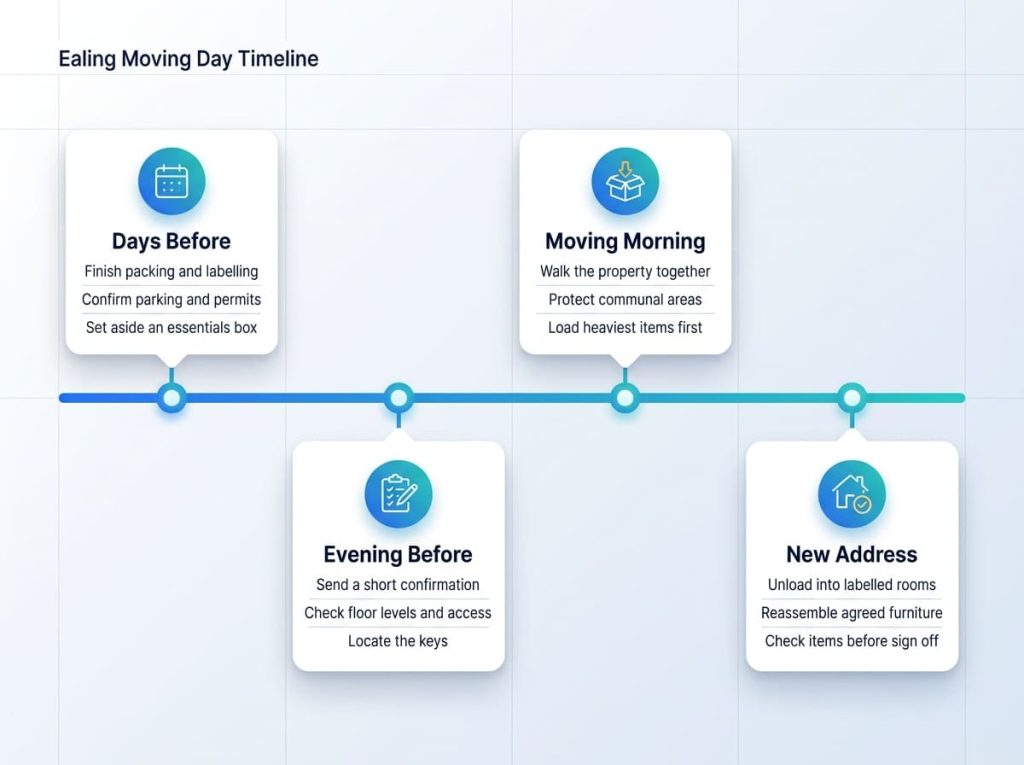
In the days before, you finish packing, label the boxes, take apart any furniture you’re handling yourself, confirm the parking and any permits, book the lift if there’s one, and set aside an essentials box and your valuables. The evening before, you send your mover a short confirmation covering the time, both addresses, the floor levels, and any access quirks, and you check the keys are where they need to be.
On the morning itself, the team arrives and walks the property with you so everyone knows what’s going and what’s staying. They protect the communal areas and any tricky corners, dismantle whatever was agreed, then load methodically, heaviest and sturdiest first, fragile items placed with care, the essentials box last so it comes off first. A final sweep of every room, including the loft, the garden, and that cupboard everyone forgets, and you’re away.
At the new address, the parking and access you sorted in advance pays off, the team unloads straight into the labelled rooms, reassembles anything that was agreed, and you check the important items before signing off. Build a buffer into the whole thing, since traffic near the Broadway, a late key handover, or a carry that’s longer than expected can all nudge the timings. A relaxed schedule means a small hiccup stays a small hiccup.
Common Mistakes That Slow an Ealing Move
A few errors come up again and again, and all of them are avoidable. Choosing purely on the lowest quote is the classic, since a cheap price often skips enough movers, insurance, or dismantling. Forgetting to mention the stairs or lift is another, and it’s the detail most likely to push the time and cost up as a surprise. People also underestimate the volume, leave the parking to chance on a controlled street, leave packing unfinished, and overlook the admin until the mail stops coming. Plan around each of those and you’ve removed most of what goes wrong.
Booking Your Man and Van in Ealing
The best Ealing moves are the well briefed ones, and by now you have the brief. Establish the property types and access at both ends, sort the parking or the lift, avoid the Broadway’s busiest hours, pack and label early, plan the dismantling, keep your valuables with you, and handle the admin in good time. Then ask for a written quote based on the real details of your home rather than a vague estimate, and confirm the plan the evening before.
When you’re ready to compare local help across Ealing and the surrounding West London areas, start at the man and van near me hub, where you can look at options for your specific area and get a quote built around your actual move. Whichever provider you choose, compare a couple, read the recent reviews, and check exactly what’s included, so the service genuinely matches the move you need. Get those pieces in place and a man and van Ealing move becomes what it should be: an organised, controlled day rather than a scramble.
Frequently Asked Questions
How much does a man and van in Ealing cost?
There’s no single fixed price, because the work varies so much from job to job. The cost depends on the distance between your addresses, the van size, the number of movers, the access and stairs at both ends, any packing or dismantling, the waiting time, and how long the job takes. For an accurate figure, describe your move fully, including the floor levels and the parking, and ask exactly what the quote includes.
Is a man and van enough for a two bedroom Ealing flat?
For most two bedroom flats, yes, typically with one or two movers and a suitably sized van. If you have a great deal to pack, a lot of heavy furniture, or a very tight completion deadline, ask about a larger crew or a full removals option instead.
Is a man and van suitable for an Ealing mansion block?
Yes, provided the access works. Tell your movers about the communal stairs, the lift size, and how far the carry is from the door to the van, so they bring enough people and the right equipment. Confirm whether the lift needs booking, since many blocks require it.
When is the best time to move in Ealing?
Avoid the commuter peaks and the busy weekend shopping hours near Ealing Broadway if you can. A weekday late morning start usually gives the calmest loading and driving conditions. Give a week or two of notice for a local move, and more for weekends and month ends when demand is higher.
Do I need a parking permit or suspension to move in Ealing?
Quite possibly, depending on the street. Many Ealing roads are in controlled parking zones, so you may need a visitor permit, a dispensation, or a suspended bay to load legally. Check the rules for both addresses with Ealing Council and arrange anything you need in advance.
Will the movers dismantle and reassemble my furniture?
Many will, if you agree it when booking so the time and tools are set aside. Beds, large wardrobes, and shelving units often have to come apart to leave a room cleanly, especially in Ealing’s older properties. Keep the fittings bagged and labelled so reassembly is quick.
How far in advance should I book a man and van in Ealing?
For a local move, a week or two is sensible, and more if you’re moving at a weekend or month end when demand peaks. If your date is fixed by a tenancy or a completion, book as early as you can to secure the slot you want.
What should I sort out besides the move itself?
Handle the admin early. Notify the important organisations of your new address, set up Royal Mail redirection, sort council tax for both properties, take meter readings on the day, and if you’re renting, arrange your check out inventory. Folding these into your plan a couple of weeks out keeps them from piling up on moving day.